The Stay-Safe-Ohio order will be superseded as new developments occur during the month, so Gov. Mike DeWine is warning everyone not to wed themselves to May 29, when the order is to expire.
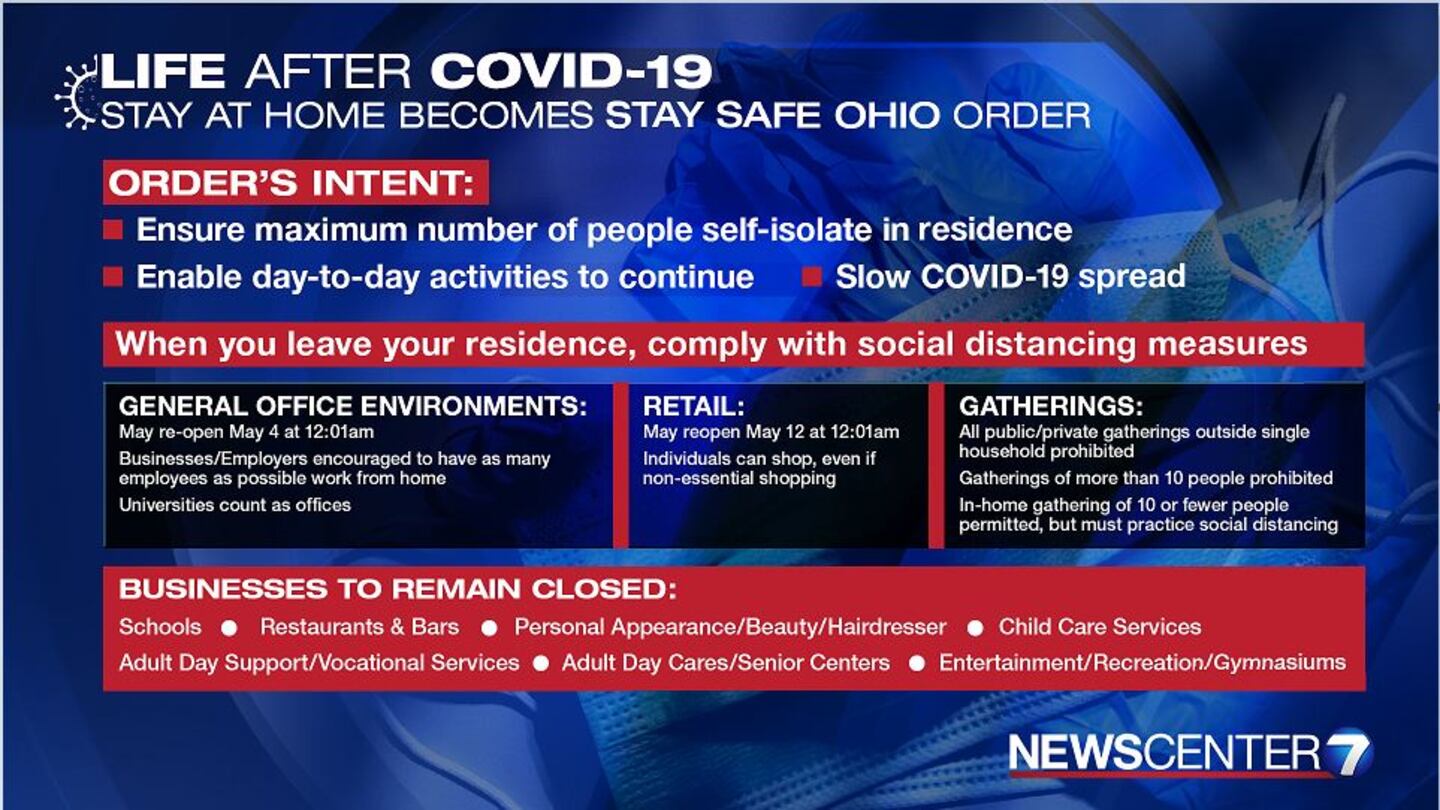
>> What does the new order look like?
The Governor held his 2 p.m. news conference to provide the latest updates:
- DeWine said the state will plan to release the protocol and date that restaurants can reopen in the next few days. The groups planning these reopening protocols are involved in the restaurant industry and are almost finished with the plans.
- DeWine reminded Ohioans that beginning today retail establishments can open by appointments and curbside pickup only. Remaining retail will reopen on May 12.
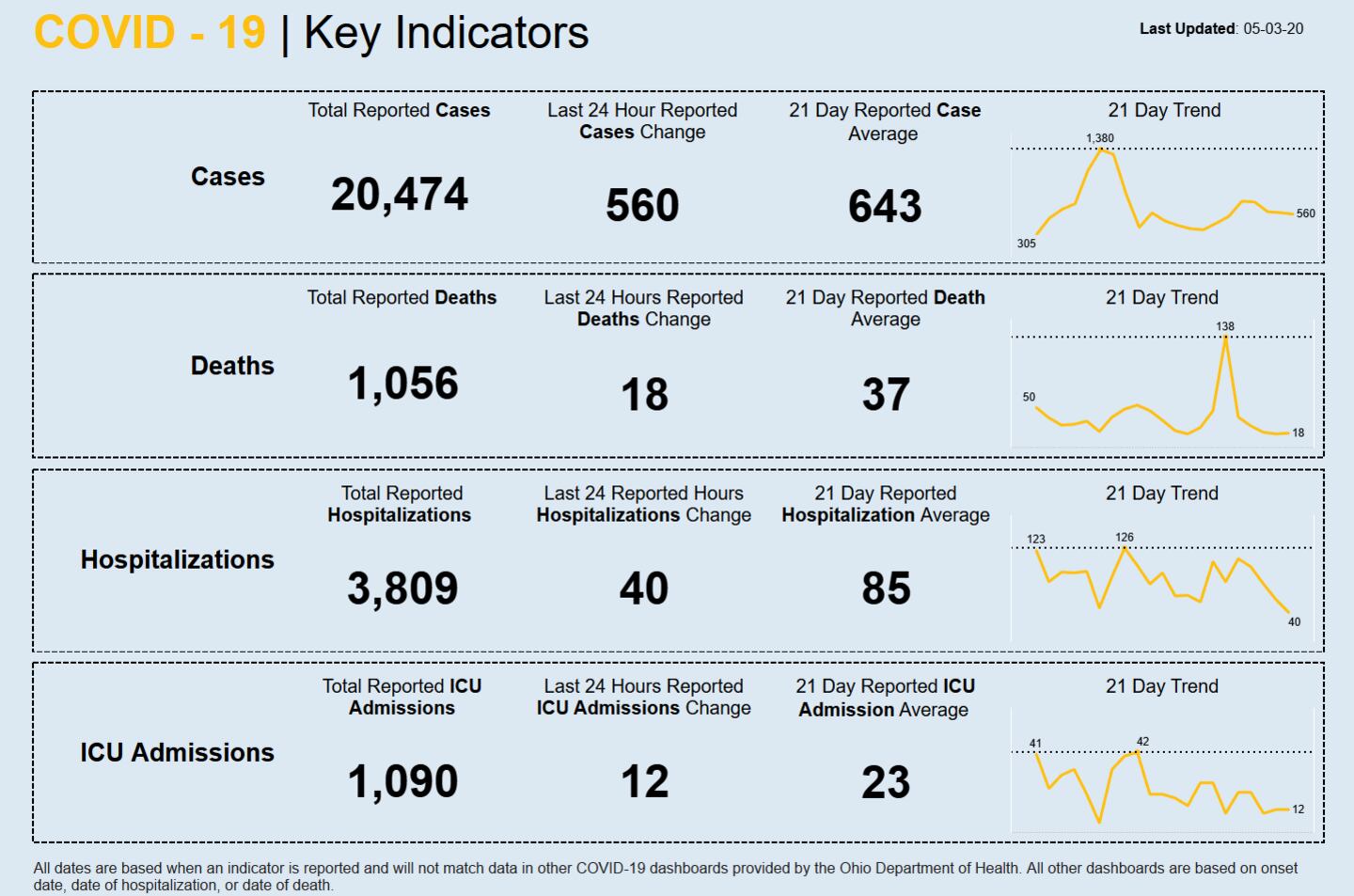
- The state has expanded its online graphs to show the trends of the various case data, now including graphs showing the last 21 day average. The trends, DeWine said, shows the state having a general decline in numbers.
- DeWine addressed the demonstrations that have happened outside the state house and outside Dr. Amy Acton’s home over the weekend. He said it is not fair game to target the family of Acton or the news media doing their jobs, when he is the person making the policy. “The buck stops with me. I’m the responsible person," DeWine said. “I’m the elected official who ran for office. I’m the one who makes policy decisions. Members of my cabinet work hard, but I set the policy.”
- DeWine touched on increasing testing capacity that is coming as May continues on. He reminded Ohioans that testing does not replace infection prevention and control.
- The state has unveiled new testing criteria:
- Priority 1: Ohioans with symptoms who are hospitalized or healthcare workers
- Priority 2: Ohioans with symptoms who are residents of longterm care, congregate living settings, first responders, public health workers, critical infrastructure workers, 65 or older or living with underlying health conditions. Ohioans without symptoms who are residents or staff directly exposed during an outbreak in longterm care or congregate living settings. Other Ohioans who are designated by public health officials to evaluate and manage community outbreaks.
- Priority 3: Ohioans with and without symptoms who receiving essential surgeries/procedures, including those that were reassessed after a delay, receiving other medically necessary procedures not requiring an overnight stay.
- The state has tested about 1.3 percent of the Ohio population for coronavirus.
- The opening of BMV locations in the state will not happen until later in May, Lt. Gov. Jon Husted said. The dates for individual locations will be announced at a later date. The state is also working to implement the “Get In Line Online" check in system at all locations to assist with crowds. This is a program that was already being rolled out prior to the pandemic.
LATEST STATE DATA: As of Monday afternoon, there are 20,474 cases in the state, 1,056 deaths, and 3,809 hospitalizations, according to the Ohio Department of Health.
Ohio has an estimated population of approximately 11.7 million, census records show.
The state’s long-term care facilities have seen 16 percent of the total cases in Ohio.
Ohio Businesses Need Your Help
Of the state’s positive cases, 20% are from Ohio’s prisons. At those prisons, there has been an increase in testing.
[ Local cases, deaths reported to Ohio Department of Health ]
There have been 154,290 people tested for coronavirus in Ohio. In the state, 3,203 cases are health care workers, which is 16 percent of the cases.
It is important to note the number of confirmed cases is not a true reflection of actual cases in the state because of the limited amount of testing available. The hope is that the number of cases will be more accurate because of the expansion of the testing standards.
Things you need to know for today:
- The state has an advisory group for restaurants and another for barbershop/salons, working on crafting plans to reopen those businesses. The state also is putting together advisory groups for libraries, travel/tourism, sports, outdoor recreation, gym, theater, childcare, adult daycare facilities, and more.
- The FDA is allowing the emergency use of an experimental drug, remdesivir, which appears to help some coronavirus patients recover faster. It is the first drug shown to help fight COVID-19. The intravenous drug from Gilead Science would be for patients with “severe disease,” such as those experiencing breathing problems requiring supplemental oxygen or ventilators. Gilead CEO Daniel O’Day and Food and Drug Administration Commissioner Stephen Hahn were among those at the briefing. According to preliminary results from a government-sponsored study, the drug shortened the time to recovery about four days on average, the Associated Press reported. Dr. Anthony Fauci, National Institutes of Health, said this week the drug would become a new standard of care for severely ill COVID-19 patients. The drug has not been tested on people with a milder illness. Gilead will donate 1.5 million doses, O’Day said and is increasing production to make more
How do we redefine work to create new value for customers and the business?
By Deloitte
Other things you need to know today:
- TESTING CRUCIAL: The NCAA’s top physician says testing if sports are to return this fall
- MAKING A DIFFERENCE: Area mom finances good deeds
- POCKETBOOK ISSUE: Can you write off work-at-home expenses?
- COVID-19 LIVE UPDATES: Read up on the latest news across the nation, world
© 2020 Cox Media Group


