ByNatalie Dreier, Cox Media Group National Content Desk
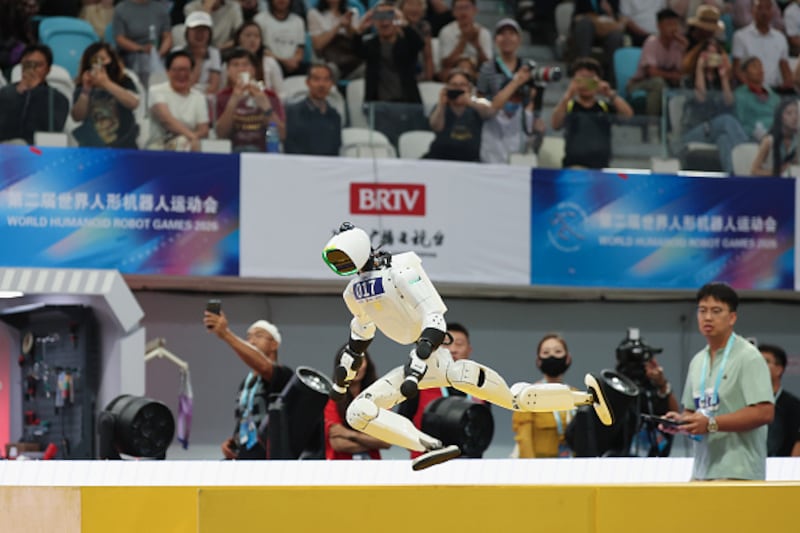
The 2nd World Humanoid Robot Games BEIJING, CHINA - AUGUST 24: Humanoid robots competes in the 100m Obstacle event during the 2nd World Humanoid Robot Games at National Speed Skating Oval on August 24, 2026 in Beijing, China. The second World Robot Games will be held in Beijing from August 22nd to 26th. (Photo by Lintao Zhang/Getty Images) (Lintao Zhang/Getty Images)
ByNatalie Dreier, Cox Media Group National Content Desk
More than 2,000 humanoid robots went for the gold in their version of the Olympics and the competitors already broke not only human records but also their own.
They competed in the World Humanoid Robot Games in Beijing, The Associated Press reported.
This is the second year of the event, which features 51 events, including running, table tennis, and soccer. Other events include weightlifting and tug-of-war.
Of the 51 events, 21 of them were scenario-based contests, according to Reuters. Some of those were industrial assembly and material loading.
One robot made by X-Humanoid from China ran the 100-meter sprint in 9.39 seconds, beating Usain Bolt’s human record of 9.58 seconds, set in 2009.
Before the games even started, another robot made by smartphone company Honor ran the 100-meter sprint in 9.32 seconds during the trials, the company said.
Both shattered the Guinness World Record for the fastest two-legged robot 100-meter sprint, set in 2022 at 24.73 seconds, the Times reported. In four years, it cut more than 18 1/2 seconds off the time.
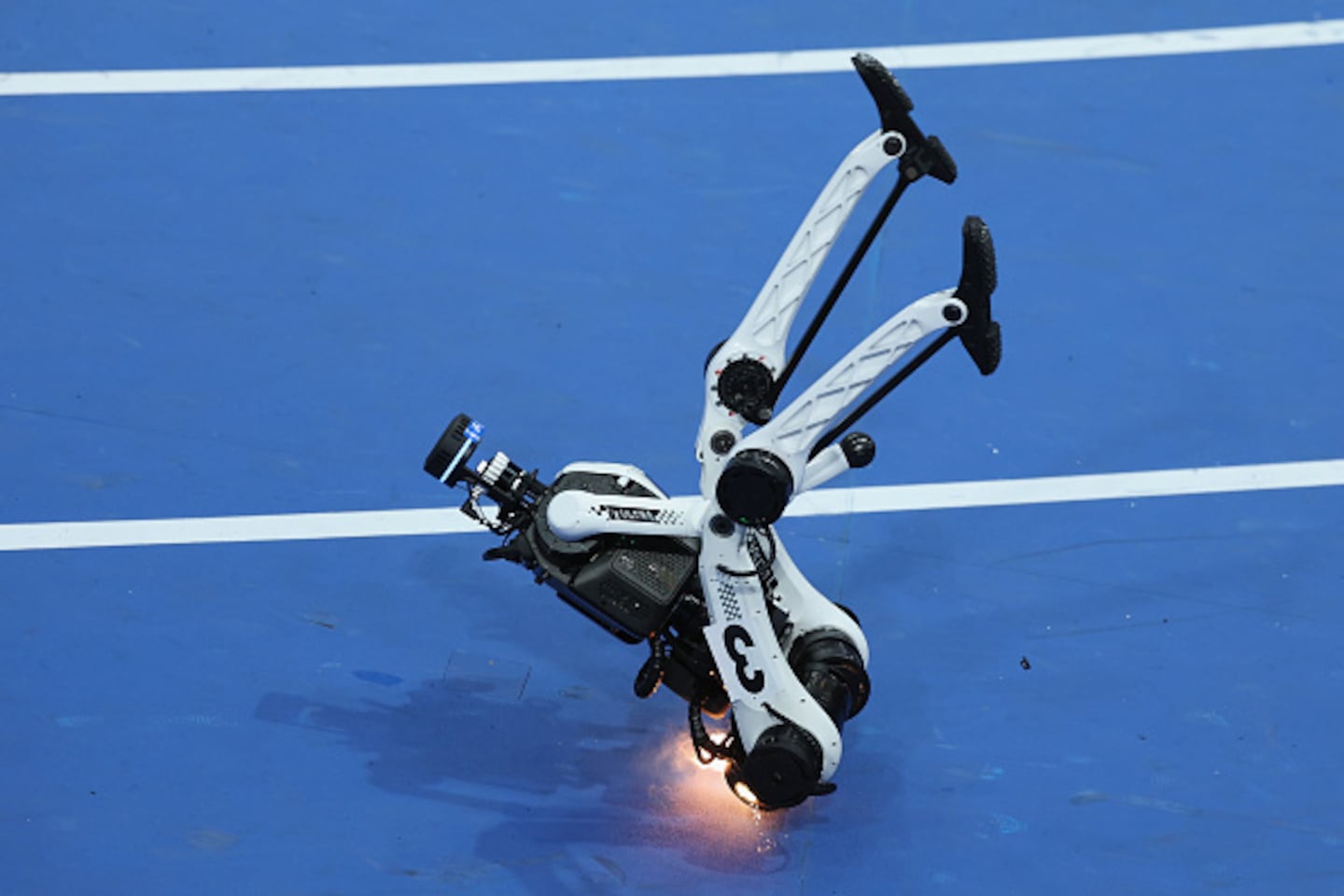
One difference between the robot and human events includes how the competitors stop. The robot athletes slam into a cushion and fall to the ground. Some had to be carted off on stretchers, CBS News reported.
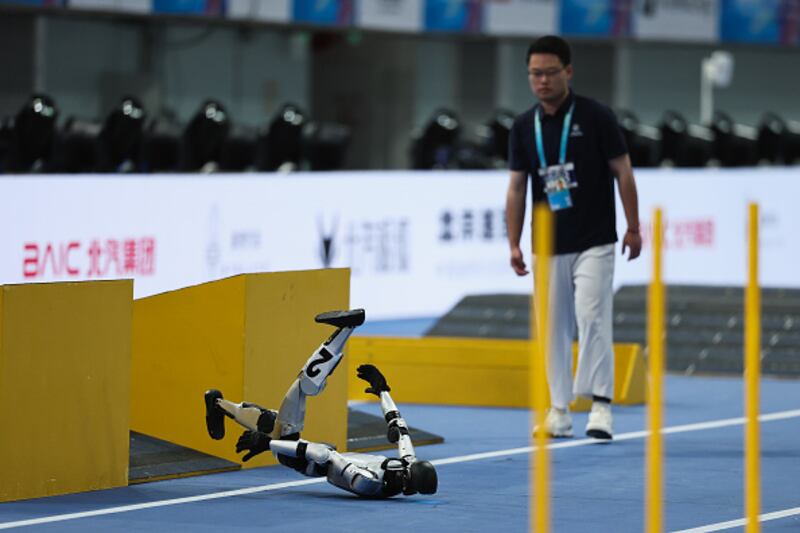
Not all of the robots crossed their finish line. Some tripped or fell over and broke into pieces. Some caught fire, according to CBS News.
The 2nd World Humanoid Robot Games BEIJING, CHINA - AUGUST 22: An humanoid robot fell and caught fire after crossing the finish line in the 100 meter preliminaries at National Speed Skating Oval on August 22, 2026 in Beijing, China. The second World Robot Games will be held in Beijing from August 22nd to 26th. (Photo by Lintao Zhang/Getty Images) (Lintao Zhang/Getty Images)
Robots also soared over the high jump record of 2.48 meters set by Javier Sotomayor, jumping 2.88 meters.
“Most of the sports the humanoids are doing don’t directly translate into utility for many of the mundane tasks people are trying to get humanoids to perform, like being useful around the house,” Queensland University of Technology professor Michael Milford told The New York Times.
Milford said that the robots are “capable in very specific and somewhat contrived events.”
Chinese media also said the games are meant to demonstrate their utility and that this is just one step in the process.
“A factory robot does not need to win a sprint, nor does a service robot need a medal,” Xinhua, the state news agency, said, according to the Times. “But every gain in speed, stability and precision on the competition floor can bring robots one step closer to becoming genuinely useful beyond it.”
One competition pitted a robot against a human in a tennis match, where the robot had to track the ball, decide where to move and make the connection, showing that it had to adapt during the game, the Times said.
0 of 46
The 2nd World Humanoid Robot Games BEIJING, CHINA - AUGUST 24: A humanoid robot crawls under netting as it demonstrates skill and dexterity as it competes in the 100 meter obstacle course at the 2nd World Robot Games at National Speed Skating Oval on August 24, 2026 in Beijing, China. The games, that feature hundreds of humanoid robots competing in track and field, tennis, boxing, football, working skills among many others, runs from August 22-26th. (Photo by Kevin Frayer/Getty Images) (Kevin Frayer/Getty Images)
The 2nd World Humanoid Robot Games BEIJING, CHINA - AUGUST 24: A humanoid robot walks over a wooden path as it demonstrate skill and dexterity in the 100 meter obstacle course at the 2nd World Robot Games at National Speed Skating Oval on August 24, 2026 in Beijing, China. The games, that feature hundreds of humanoid robots competing in track and field, tennis, boxing, football, working skills among many others, runs from August 22-26th. (Photo by Kevin Frayer/Getty Images) (Kevin Frayer/Getty Images)
The 2nd World Humanoid Robot Games BEIJING, CHINA - AUGUST 22: An humanoid robot fell and caught fire after crossing the finish line in the 100 meter preliminaries at National Speed Skating Oval on August 22, 2026 in Beijing, China. The second World Robot Games will be held in Beijing from August 22nd to 26th. (Photo by Lintao Zhang/Getty Images) (Lintao Zhang/Getty Images)
The 2nd World Humanoid Robot Games BEIJING, CHINA - AUGUST 24: Humanoid robots play tennis during the 2nd World Humanoid Robot Games at National Speed Skating Oval on August 24, 2026 in Beijing, China. The second World Robot Games will be held in Beijing from August 22nd to 26th. (Photo by Lintao Zhang/Getty Images) (Lintao Zhang/Getty Images)
The 2nd World Humanoid Robot Games BEIJING, CHINA - AUGUST 24: Humanoid robots competes in the floor exercise event during the 2nd World Humanoid Robot Games at National Speed Skating Oval on August 24, 2026 in Beijing, China. The second World Robot Games will be held in Beijing from August 22nd to 26th. (Photo by Lintao Zhang/Getty Images) (Lintao Zhang/Getty Images)
The 2nd World Humanoid Robot Games BEIJING, CHINA - AUGUST 24: A humanoid robot kicks another in a fight during a kickboxing match at the 2nd World Robot Games at National Speed Skating Oval on August 24, 2026 in Beijing, China. The games, that feature hundreds of humanoid robots competing in track and field, tennis, boxing, football, working skills among many others, runs from August 22-26th. (Photo by Kevin Frayer/Getty Images) (Kevin Frayer/Getty Images)
The 2nd World Humanoid Robot Games BEIJING, CHINA - AUGUST 24: Humanoid robots competes in the weightlifting event during the 2nd World Humanoid Robot Games at National Speed Skating Oval on August 24, 2026 in Beijing, China. The second World Robot Games will be held in Beijing from August 22nd to 26th. (Photo by Lintao Zhang/Getty Images) (Lintao Zhang/Getty Images)
The 2nd World Humanoid Robot Games BEIJING, CHINA - AUGUST 24: Humanoid robots play tennis during the 2nd World Humanoid Robot Games at National Speed Skating Oval on August 24, 2026 in Beijing, China. The second World Robot Games will be held in Beijing from August 22nd to 26th. (Photo by Lintao Zhang/Getty Images) (Lintao Zhang/Getty Images)
The 2nd World Humanoid Robot Games BEIJING, CHINA - AUGUST 24: Humanoid robots competes in the 100m Obstacle event during the 2nd World Humanoid Robot Games at National Speed Skating Oval on August 24, 2026 in Beijing, China. The second World Robot Games will be held in Beijing from August 22nd to 26th. (Photo by Lintao Zhang/Getty Images) (Lintao Zhang/Getty Images)
The 2nd World Humanoid Robot Games BEIJING, CHINA - AUGUST 24: Humanoid robots competes in the 100m Obstacle event during the 2nd World Humanoid Robot Games at National Speed Skating Oval on August 24, 2026 in Beijing, China. The second World Robot Games will be held in Beijing from August 22nd to 26th. (Photo by Lintao Zhang/Getty Images) (Lintao Zhang/Getty Images)
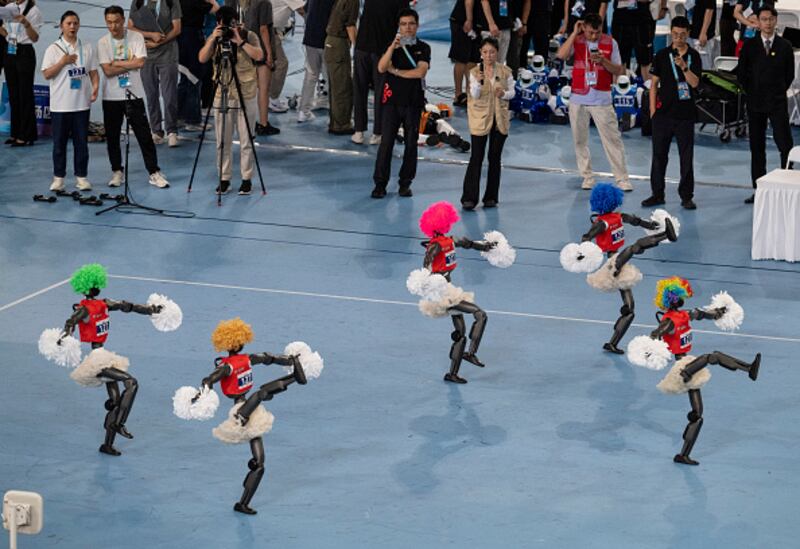
The 2nd World Humanoid Robot Games BEIJING, CHINA - AUGUST 24: Humanoid robots competes in the cheerleading during the 2nd World Humanoid Robot Games at National Speed Skating Oval on August 24, 2026 in Beijing, China. The second World Robot Games will be held in Beijing from August 22nd to 26th. (Photo by Lintao Zhang/Getty Images) (Lintao Zhang/Getty Images)
The 2nd World Humanoid Robot Games BEIJING, CHINA - AUGUST 24: Humanoid robots play tennis during the 2nd World Humanoid Robot Games at National Speed Skating Oval on August 24, 2026 in Beijing, China. The second World Robot Games will be held in Beijing from August 22nd to 26th. (Photo by Lintao Zhang/Getty Images) (Lintao Zhang/Getty Images)
The 2nd World Humanoid Robot Games BEIJING, CHINA - AUGUST 24: Humanoid robots competes in the 100m Obstacle event during the 2nd World Humanoid Robot Games at National Speed Skating Oval on August 24, 2026 in Beijing, China. The second World Robot Games will be held in Beijing from August 22nd to 26th. (Photo by Lintao Zhang/Getty Images) (Lintao Zhang/Getty Images)
The 2nd World Humanoid Robot Games BEIJING, CHINA - AUGUST 24: Humanoid robots wear colourful wigs as they dance in the cheerleading competition at the 2nd World Robot Games at National Speed Skating Oval on August 24, 2026 in Beijing, China. The games, that feature hundreds of humanoid robots competing in track and field, tennis, boxing, football, working skills among many others, runs from August 22-26th. (Photo by Kevin Frayer/Getty Images) (Kevin Frayer/Getty Images)
The 2nd World Humanoid Robot Games BEIJING, CHINA - AUGUST 24: A humanoid robot prepares to fight an opponent during a kickboxing match at the 2nd World Robot Games at National Speed Skating Oval on August 24, 2026 in Beijing, China. The games, that feature hundreds of humanoid robots competing in track and field, tennis, boxing, football, working skills among many others, runs from August 22-26th. (Photo by Kevin Frayer/Getty Images) (Kevin Frayer/Getty Images)
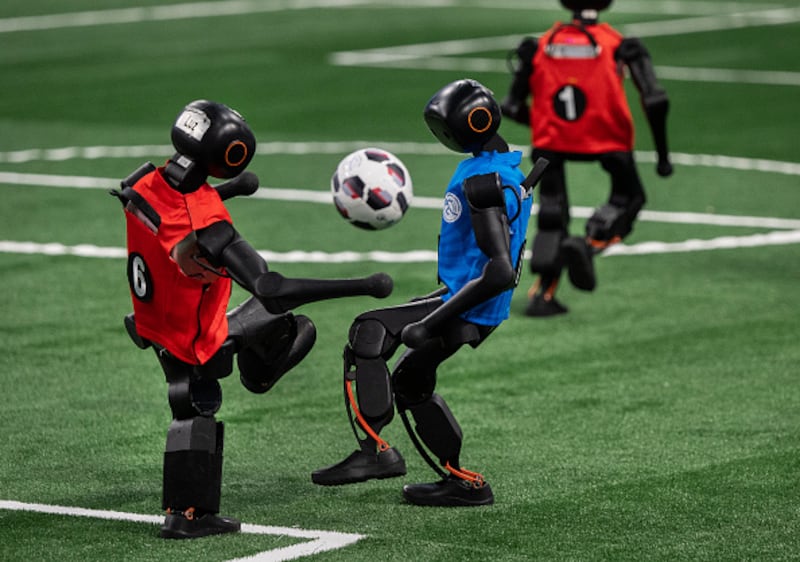
The 2nd World Humanoid Robot Games BEIJING, CHINA - AUGUST 23: Humanoid robots play football in competition the 2nd World Robot Games at National Speed Skating Oval on August 23, 2026 in Beijing, China. The games, that feature hundreds of humanoid robots competing in track and field, tennis, boxing, football, working skills among many others, runs from August 22-26th. (Photo by Kevin Frayer/Getty Images) (Kevin Frayer/Getty Images)
The 2nd World Humanoid Robot Games BEIJING, CHINA - AUGUST 24: Humanoid robots wear colourful wigs as they dance in the cheerleading competition at the 2nd World Robot Games at National Speed Skating Oval on August 24, 2026 in Beijing, China. The games, that feature hundreds of humanoid robots competing in track and field, tennis, boxing, football, working skills among many others, runs from August 22-26th. (Photo by Kevin Frayer/Getty Images) (Kevin Frayer/Getty Images)
The 2nd World Humanoid Robot Games BEIJING, CHINA - AUGUST 24: Humanoid robots competes in the 100m Obstacle event during the 2nd World Humanoid Robot Games at National Speed Skating Oval on August 24, 2026 in Beijing, China. The second World Robot Games will be held in Beijing from August 22nd to 26th. (Photo by Lintao Zhang/Getty Images) (Lintao Zhang/Getty Images)
The 2nd World Humanoid Robot Games BEIJING, CHINA - AUGUST 24: Humanoid robots competes in the 100m Obstacle event during the 2nd World Humanoid Robot Games at National Speed Skating Oval on August 24, 2026 in Beijing, China. The second World Robot Games will be held in Beijing from August 22nd to 26th. (Photo by Lintao Zhang/Getty Images) (Lintao Zhang/Getty Images)
The 2nd World Humanoid Robot Games BEIJING, CHINA - AUGUST 24: Humanoid robots competes in the cheerleading during the 2nd World Humanoid Robot Games at National Speed Skating Oval on August 24, 2026 in Beijing, China. The second World Robot Games will be held in Beijing from August 22nd to 26th. (Photo by Lintao Zhang/Getty Images) (Lintao Zhang/Getty Images)
The 2nd World Humanoid Robot Games BEIJING, CHINA - AUGUST 24: A humanoid robot climbs over a wooden box as it demonstrate skill and dexterity in the 100 meter obstacle course at the 2nd World Robot Games at National Speed Skating Oval on August 24, 2026 in Beijing, China. The games, that feature hundreds of humanoid robots competing in track and field, tennis, boxing, football, working skills among many others, runs from August 22-26th. (Photo by Kevin Frayer/Getty Images) (Kevin Frayer/Getty Images)
The 2nd World Humanoid Robot Games BEIJING, CHINA - AUGUST 24: A humanoid robot crawls under netting as it demonstrates skill and dexterity as it competes in the 100 meter obstacle course at the 2nd World Robot Games at National Speed Skating Oval on August 24, 2026 in Beijing, China. The games, that feature hundreds of humanoid robots competing in track and field, tennis, boxing, football, working skills among many others, runs from August 22-26th. (Photo by Kevin Frayer/Getty Images) (Kevin Frayer/Getty Images)
The 2nd World Humanoid Robot Games BEIJING, CHINA - AUGUST 24: Humanoid robots duijs kicks another in a fight during a kickboxing match at the 2nd World Robot Games at National Speed Skating Oval on August 24, 2026 in Beijing, China. The games, that feature hundreds of humanoid robots competing in track and field, tennis, boxing, football, working skills among many others, runs from August 22-26th. (Photo by Kevin Frayer/Getty Images) (Kevin Frayer/Getty Images)
The 2nd World Humanoid Robot Games BEIJING, CHINA - AUGUST 23: A humanoid robot is carried off the track on a stretcher after crashing during the 400 meter for small robots at the 2nd World Robot Games at National Speed Skating Oval on August 23, 2026 in Beijing, China. The games, that feature hundreds of humanoid robots competing in track and field, tennis, boxing, football, working skills among many others, runs from August 22-26th. (Photo by Kevin Frayer/Getty Images) (Kevin Frayer/Getty Images)
The 2nd World Humanoid Robot Games BEIJING, CHINA - AUGUST 24: Humanoid robots competes in the lightweight combat event during the 2nd World Humanoid Robot Games at National Speed Skating Oval on August 24, 2026 in Beijing, China. The second World Robot Games will be held in Beijing from August 22nd to 26th. (Photo by Lintao Zhang/Getty Images) (Lintao Zhang/Getty Images)
The 2nd World Humanoid Robot Games BEIJING, CHINA - AUGUST 24: Humanoid robots competes in the 400m Obstacle event during the 2nd World Humanoid Robot Games at National Speed Skating Oval on August 24, 2026 in Beijing, China. The second World Robot Games will be held in Beijing from August 22nd to 26th. (Photo by Lintao Zhang/Getty Images) (Lintao Zhang/Getty Images)
The 2nd World Humanoid Robot Games BEIJING, CHINA - AUGUST 24: Humanoid robots competes in the cheerleading during the 2nd World Humanoid Robot Games at National Speed Skating Oval on August 24, 2026 in Beijing, China. The second World Robot Games will be held in Beijing from August 22nd to 26th. (Photo by Lintao Zhang/Getty Images) (Lintao Zhang/Getty Images)
The 2nd World Humanoid Robot Games BEIJING, CHINA - AUGUST 24: A humanoid robot jumps down from a large wooden box as it demonstrate skill and dexterity in the 100 meter obstacle course at the 2nd World Robot Games at National Speed Skating Oval on August 24, 2026 in Beijing, China. The games, that feature hundreds of humanoid robots competing in track and field, tennis, boxing, football, working skills among many others, runs from August 22-26th. (Photo by Kevin Frayer/Getty Images) (Kevin Frayer/Getty Images)
The 2nd World Humanoid Robot Games BEIJING, CHINA - AUGUST 24: Humanoid robots competes in the weightlifting event during the 2nd World Humanoid Robot Games at National Speed Skating Oval on August 24, 2026 in Beijing, China. The second World Robot Games will be held in Beijing from August 22nd to 26th. (Photo by Lintao Zhang/Getty Images) (Lintao Zhang/Getty Images)
The 2nd World Humanoid Robot Games BEIJING, CHINA - AUGUST 24: Humanoid robots play football in a competition during the 2nd World Robot Games at National Speed Skating Oval on August 24, 2026 in Beijing, China. The games, that feature hundreds of humanoid robots competing in track and field, tennis, boxing, football, working skills among many others, runs from August 22-26th. (Photo by Kevin Frayer/Getty Images) (Kevin Frayer/Getty Images)
The 2nd World Humanoid Robot Games BEIJING, CHINA - AUGUST 22: An humanoid robot fell and caught fire after crossing the finish line in the 100m preliminaries at National Speed Skating Oval on August 22, 2026 in Beijing, China. The second World Robot Games will be held in Beijing from August 22nd to 26th. (Photo by Lintao Zhang/Getty Images) (Lintao Zhang/Getty Images)
The 2nd World Humanoid Robot Games BEIJING, CHINA - AUGUST 24: A humanoid robot climbs over a wooden section of stairs as it demonstrate skill and dexterity in the 100 meter obstacle course at the 2nd World Robot Games at National Speed Skating Oval on August 24, 2026 in Beijing, China. The games, that feature hundreds of humanoid robots competing in track and field, tennis, boxing, football, working skills among many others, runs from August 22-26th. (Photo by Kevin Frayer/Getty Images)x (Kevin Frayer/Getty Images)
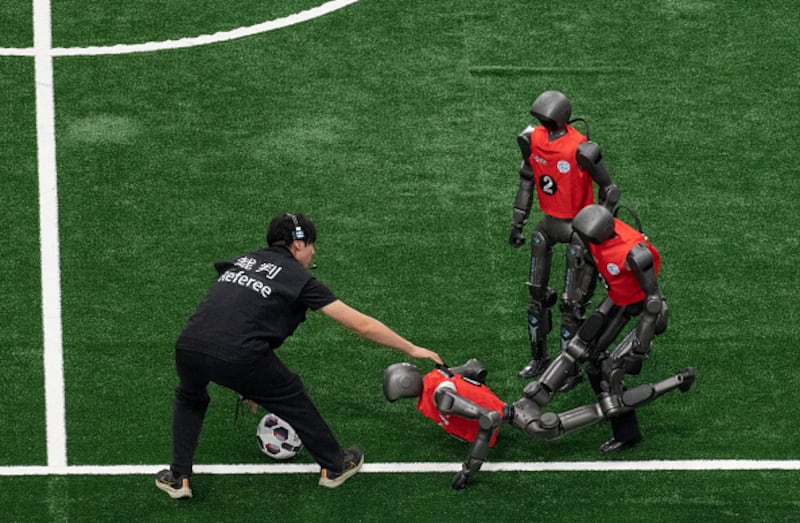
The 2nd World Humanoid Robot Games BEIJING, CHINA - AUGUST 23: A referee helps pull up a humanoid robot that collided with others qfootball in competition the 2nd World Robot Games at National Speed Skating Oval on August 23, 2026 in Beijing, China. The games, that feature hundreds of humanoid robots competing in track and field, tennis, boxing, football, working skills among many others, runs from August 22-26th. (Photo by Kevin Frayer/Getty Images) (Kevin Frayer/Getty Images)
The 2nd World Humanoid Robot Games BEIJING, CHINA - AUGUST 24: Humanoid robots competes in the cheerleading during the 2nd World Humanoid Robot Games at National Speed Skating Oval on August 24, 2026 in Beijing, China. The second World Robot Games will be held in Beijing from August 22nd to 26th. (Photo by Lintao Zhang/Getty Images) (Lintao Zhang/Getty Images)
The 2nd World Humanoid Robot Games BEIJING, CHINA - AUGUST 24: Humanoid robots competes in the weightlifting event during the 2nd World Humanoid Robot Games at National Speed Skating Oval on August 24, 2026 in Beijing, China. The second World Robot Games will be held in Beijing from August 22nd to 26th. (Photo by Lintao Zhang/Getty Images) (Lintao Zhang/Getty Images)
The 2nd World Humanoid Robot Games BEIJING, CHINA - AUGUST 24: Humanoid robots competes in the cheerleading during the 2nd World Humanoid Robot Games at National Speed Skating Oval on August 24, 2026 in Beijing, China. The second World Robot Games will be held in Beijing from August 22nd to 26th. (Photo by Lintao Zhang/Getty Images) (Lintao Zhang/Getty Images)
The 2nd World Humanoid Robot Games BEIJING, CHINA - AUGUST 24: Humanoid robots competes in the 100m Obstacle event during the 2nd World Humanoid Robot Games at National Speed Skating Oval on August 24, 2026 in Beijing, China. The second World Robot Games will be held in Beijing from August 22nd to 26th. (Photo by Lintao Zhang/Getty Images) (Lintao Zhang/Getty Images)
The 2nd World Humanoid Robot Games BEIJING, CHINA - AUGUST 24: Humanoid robots competes in the weightlifting event during the 2nd World Humanoid Robot Games at National Speed Skating Oval on August 24, 2026 in Beijing, China. The second World Robot Games will be held in Beijing from August 22nd to 26th. (Photo by Lintao Zhang/Getty Images) (Lintao Zhang/Getty Images)
The 2nd World Humanoid Robot Games BEIJING, CHINA - AUGUST 24: Humanoid robots competes in the lightweight combat event during the 2nd World Humanoid Robot Games at National Speed Skating Oval on August 24, 2026 in Beijing, China. The second World Robot Games will be held in Beijing from August 22nd to 26th. (Photo by Lintao Zhang/Getty Images) (Lintao Zhang/Getty Images)