

Across North America, sovereign wealth funds appear to be the social policy du jour.
Sen. Bernie Sanders recently proposed a sovereign wealth fund that would tax shares of AI companies to give an annual cash dividend to Americans, and has introduced legislation to that effect. On the other end of the political spectrum, President Donald Trump signed an executive order in February 2025 directing the Secretary of the Treasury and the Secretary of Commerce to look into starting a national sovereign wealth fund "to promote the long-term financial health and international leadership of the United States." Up north, Canadian Prime Minister Mark Carney announced the Canada Strong Fund in April, which uses public funds to invest in energy and infrastructure projects — though experts say it doesn't quite fit the definition of a sovereign wealth fund, as the money comes from borrowing rather than a budget surplus.
Sovereign wealth funds are a government investment strategy that uses surplus revenues to increase returns and spend on development, though the exact mechanisms and principles can differ. The first one can be traced back to 1953 with the Kuwait Investment Authority, and similar systems have been deployed in Norway, the United Arab Emirates and Singapore, Next City reports.
These funds have nearly always been launched by a country, province, or state — but what happens when a city deploys one?
Less than two hours from Rio de Janeiro, the bedroom community of Maricá skyrocketed to become the fourth richest city in Brazil after oil deposits were discovered off its shores in 2006. The city of 212,000 has since launched a basic income as well as a sovereign wealth fund that’s piquing the interest of researchers the world over. Other Brazilian cities are following suit. Should U.S. cities do the same?
Inside Maricá’s sovereign wealth fund
In Maricá, free air-conditioned buses and bike shares ride through clean, safe city streets with modern infrastructure. Signs posted at pharmacies and supermarkets advertise that they accept the Mumbuca, a local currency derived from a basic income provided to more than half of Maricá's residents. Farms allow rural farmers to grow produce and medicinal plants to increase food security during inevitable global trade disruptions like a pandemic or trade war.
In a country with a history of resource booms that didn’t create lasting development (Brazil wood, rubber, and sugar, to name a few), Maricá is aiming to build a strong economy that can continue growing when the oil taps run dry.
In 2013, Maricá launched Renda Básica de Cidadania, a basic income of 230 Mumbucas ($45 USD) per month to households earning less than three times the national minimum wage in order to buy essentials. The money can only be used within Maricá to keep it circulating in the local economy rather than being absorbed by Rio.
The results have been promising. According to a 2024 Jain Family Institute study, households that receive Mumbucas have increased their income by 9%.
In the same year, Maricá created Companhia de Desenvolvimento de Maricá (CODEMAR), a company at arm's length from the mayor's office, built to invest in development projects focused on generating jobs. Then in 2017, Maricá created a sovereign wealth fund with an initial investment of R$275 million ($54 million USD). The fund has since ballooned to more than R$2 billion ($415 million USD).
The fund was created to invest in long-term development for when the oil royalties run out. That means growing Maricá’s tourism industry, advancing its schooling, and helping local entrepreneurs, along with earning returns on low-risk domestic investments and bonds. It also creates legal hurdles that future governments would have to jump if they want to shift directions.
“The truth is, they couldn’t spend all the money that they were getting to their budget,” explains Leandro Ferreira, a researcher at the Universidade Estadual de Campinas and director of the Brazilian Forum of Sovereign Wealth Funds.
Maricá’s fund legally obliges investment in development, rather than just equities that add to municipal coffers. Food security and mitigating climate change, for instance, aren’t moneymakers, but follow the fund’s mandate. “Markets will not develop sectors that are not profitable, but some of those sectors are very important for the future of the planet,” says Ferreira.
Through CODEMAR, the fund invested an initial R$1.5 billion ($290 million USD) in both the construction of a seaport estimated to generate 13,000 jobs and a five-star resort. It’s also contributed to a satellite teleport, a shopping mall, a technological park, airport expansions, greenhouses, and the city’s samba school, which rose to the highest competitive level for the first time in 2026.
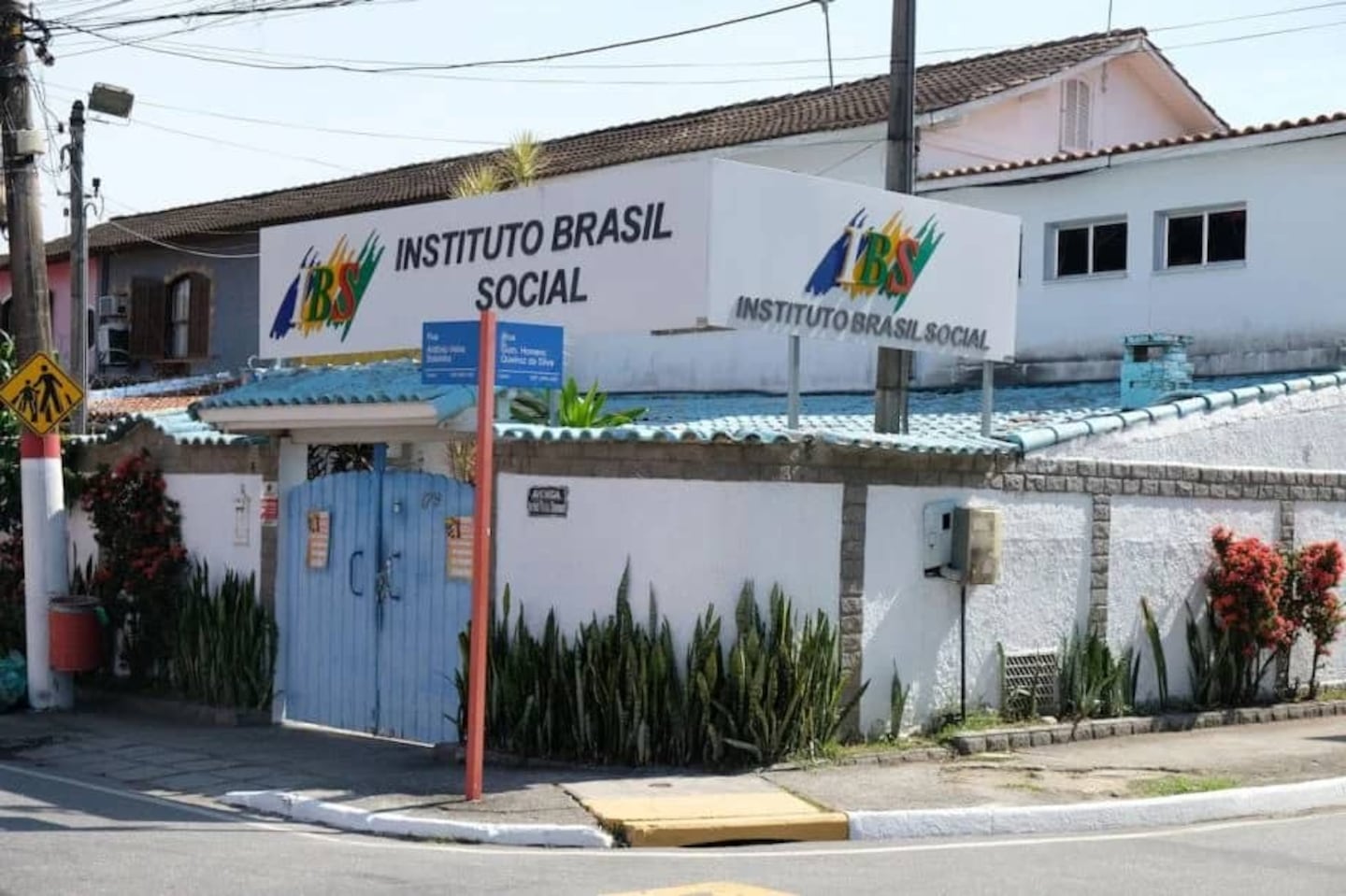
Next City
But Maricá’s sovereign wealth fund does have its drawbacks.
For one, since it’s managed by a city rather than a state or federal government, it’s relatively small. For big projects like the seaport and airport expansions, Maricá needs to campaign the larger Brazilian Development Bank or World Bank for money, but these institutions are more inclined to fund cities without oil revenues. There’s also skepticism about whether funding will make a lasting impact, or whether it’ll fall through when the royalties do.
Maricá’s fund is also not completely autonomous, meaning it is susceptible to changes if a new government is elected. “In order to have good governance, the funds should be protected from political influence,” says Ferreira. “That’s not what happens with those funds that we have in Brazil, because the manager can be changed, the investment strategy can be changed, even the laws themselves can be changed.”
Since 2009, Maricá has been led by the Brazilian Workers’ Party (PT), the same political party as Brazilian President Luiz Inácio Lula da Silva, who is up for re-election in October. Maricá’s ties to the PT have led to criticism that its policies aren’t useful across the political spectrum. “Maricá is definitely a public policy laboratory because there’s a lot of innovation, but most particularly a PT lab,” says Ferreira.
But other cities in Brazil are proving that sovereign wealth funds can cross political lines.
The beach town of Ilhabela in the state of São Paulo has had a sovereign wealth fund since 2018, and it’s led by a mayor linked to former right-wing president Jaír Bolsonaro. The state of Paraná, also not led by the PT, launched a sovereign wealth fund this year. “In terms of proving itself as an instrument, these funds can reach across the political spectrum,” says Ferreira, whose forum facilitates conversations between Brazil’s different funds, which also include Niterói, Curitiba, and Espírito Santo.
Where a sovereign wealth fund will, and won’t, work
More Brazilian cities are looking to establish funds, but Ferreira says that he frequently warns mayors that not everyone will become the next Norway, or even the next Maricá. “What we are trying to say in those moments is ‘hey, take it easy, there are multiple sovereign wealth fund formats,’” he says.
Americans don’t need to look far for a domestic example of a sovereign wealth fund. Alaska started its fund in 1976 with mineral and oil royalties. Texas also has its Economic Stabilization Fund (ESF or Rainy Day Fund), which invests money from its oil royalties in case of an emergency. But no U.S. cities have sovereign wealth funds.
According to Paul Katz, senior vice president of the Jain Family Institute, which carried out the Maricá study, the reason is simple: U.S. cities don’t have enough extra cash from resources lying around to start one. “Creating sovereign wealth funds in the absence of a surplus would not be the strategy I would recommend,” he says.
U.S. cities also don’t have the option of requesting money from a federal development bank for larger investments, as Maricá has with the Brazilian Development Bank. Here’s where a federal fund like what Sanders or Trump is proposing might be useful.
That doesn't mean U.S. cities can't make innovative investment strategies. Cities could leverage assets like real estate and public lands to finance a fund. Or, they could start a government-backed bank that could loan funds for development projects like construction of public housing or decarbonization; campaigns for municipal banks have taken off in major cities, including San Francisco (where public banking will be on the ballot this November) and New York City, calling for local governments to adopt the model of North Dakota's public bank.
“There are many ways that U.S. cities could contribute using their balance sheets in a positive way that facilitates access to credit for others who are doing things strategic to development,” says Katz.
But without huge cash windfalls as Maricá has with oil, it’s difficult for U.S. cities to be as ambitious as Brazilian ones. “If you’re a very, very small fish, it’s very hard to be making waves.”
This story was produced by Next City, a nonprofit newsroom covering solutions for equitable cities, and reviewed and distributed by Stacker.


